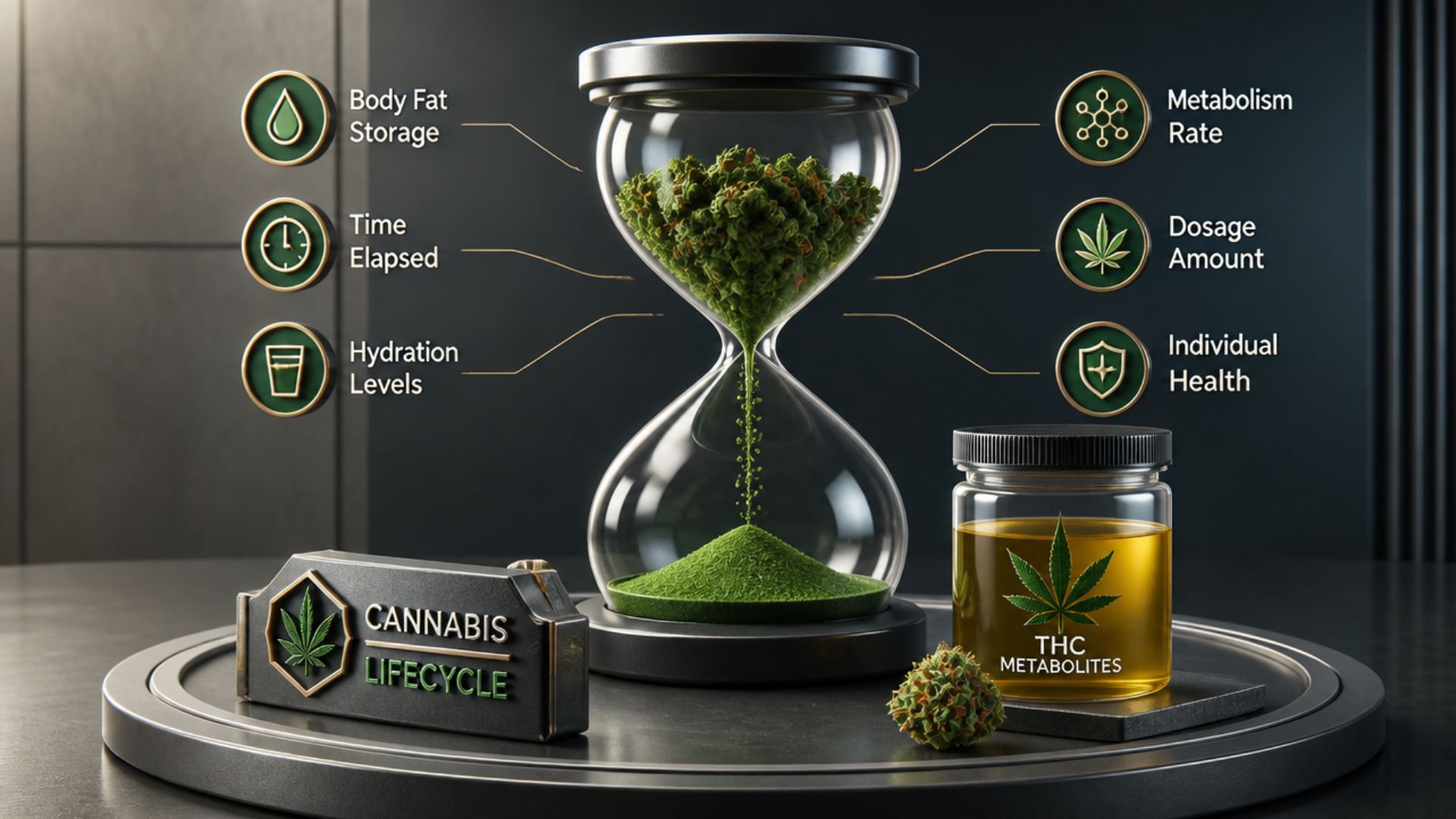
The Morning-After Problem: 6 Reasons Cannabis Lingers in Your System
Published by Drug Driving Solicitors, specialist UK solicitors defending motorists facing drug driving charges.
The morning after using cannabis can create a false sense of certainty. The noticeable high may have disappeared, you may have slept normally, and you may feel completely capable of driving. None of those things, however, directly reveals the concentration of THC still present in your blood.
Under Section 5A of the Road Traffic Act 1988, driving with a specified controlled drug above its prescribed limit is an offence separate from driving while impaired. In England and Wales, the specified blood limit for delta-9-tetrahydrocannabinol, or THC, is 2 micrograms per litre of blood. Cannabis is included among drugs subjected to what the government describes as a "zero tolerance approach", although the threshold is deliberately set above zero to rule out accidental exposure. Obvious impairment does not have to be proved for the specified-limit offence.
1. Regular Cannabis Use Can Significantly Extend the Detection Window
Repeated Use Can Leave Residual THC
How often someone uses cannabis can make a considerable difference to what remains in the bloodstream the following day. An occasional user and someone who consumes cannabis several times a week or every day may have very different THC profiles, even when the time since their most recent use is similar.
Research involving chronic cannabis users has demonstrated that measurable THC can persist during prolonged periods of monitored abstinence. In one study, some frequent users still had detectable THC in their blood after six full days without further cannabis use. That does not mean every regular user will remain above the driving limit for days, but it does illustrate how widely detection periods can vary.
Last Night's Cannabis May Not Be the Whole Story
For somebody who uses cannabis frequently, the THC found in a later blood sample may therefore be influenced by their longer-term pattern of use rather than solely by what they consumed the previous evening. Repeated exposure can result in cannabinoids remaining within the body and being eliminated over a more prolonged period.
This is one reason simple rules such as "wait eight hours" or "sleep overnight and you will be fine" cannot reliably predict whether a regular user will be below the statutory threshold. Individual results can differ substantially, and the absence of noticeable intoxication provides little reassurance about a specific laboratory concentration.
2. Edibles Can Alter the Timing of THC Absorption
Oral Cannabis Peaks Later Than Inhaled Cannabis
Smoking and vaping introduce THC through the lungs, producing relatively rapid absorption. Edibles behave differently because the cannabis must pass through the digestive system before being absorbed and metabolised. Controlled studies have found that oral cannabis generally produces a substantially slower and more variable rise in THC than inhaled cannabis.
This difference can complicate morning-after assumptions. Someone who eats a cannabis product late in the evening may experience its peak effects and changing blood concentrations considerably later than someone who smoked cannabis at the same time. Oral THC absorption is also notably variable between individuals and between different edible formulations.
Consumption Method Changes the Timeline
Cannabis brownies, oils, capsules, smoked products and vaporised cannabis should not be treated as though they create identical pharmacokinetic patterns. Research on edible cannabis has reported delayed effects, with peak subjective effects occurring several hours after consumption in some studies.
Consequently, counting a fixed number of hours from the moment cannabis was consumed can be particularly unreliable with edibles. The relevant timeline depends not simply on when the product was taken, but on how quickly THC was absorbed, the dose involved and how the individual's body processed it.
3. Feeling Sober Does Not Tell You Your Blood THC Concentration
The Sensation of Being High Can Disappear First
Most people naturally judge cannabis intoxication according to how they feel. Once the relaxation, altered perception, drowsiness or other noticeable effects have passed, it is tempting to assume the drug has effectively left the system as well.
The relationship is more complicated. Subjective effects and measured blood concentrations do not move together in a sufficiently predictable way to make someone's perception of sobriety an accurate THC test. Research examining oral cannabis, for example, has found substantial variability between blood cannabinoid concentrations, self-reported intoxication and measures of performance.
Section 5A Is Based on the Specified Limit
This distinction becomes especially important because a Section 5A prosecution is not dependent on proving that somebody looked high or drove badly. The offence concerns having a specified controlled drug above its prescribed concentration while driving, attempting to drive or being in charge of a vehicle.
A driver could therefore feel alert, communicate normally and believe the effects have completely disappeared while still facing an evidential question about the amount of THC in their blood. Feeling normal may be relevant to a person's own perception of fitness, but it cannot establish whether their laboratory result will fall below 2 micrograms per litre.
4. THC Is Fat-Soluble and Does Not Clear Like Alcohol
THC Is Distributed Into Body Tissues
Comparisons between cannabis and alcohol can be misleading. Drivers are familiar with rough calculations suggesting that alcohol is eliminated over time at an approximately predictable rate. THC does not lend itself to the same type of simple hourly calculation.
THC is highly lipophilic, meaning that it readily distributes into fatty tissues. After entering the bloodstream, it moves throughout the body before being metabolised and eliminated. Its pharmacokinetic behaviour is therefore more complicated than a straightforward process in which the concentration simply falls by a predictable amount every hour.
There Is No Simple THC Countdown
This helps explain why estimating a cannabis blood level from time alone is so difficult. Blood THC initially falls rapidly after inhalation as the compound distributes into tissues, but subsequent elimination and redistribution create a more complicated concentration pattern.
Repeated cannabis use makes the picture even more difficult because residual cannabinoids can persist after the acute effects have disappeared. A driver cannot therefore use the alcohol model and assume that sleeping for a certain number of hours automatically places them beneath the cannabis limit the following morning.
5. Individual Physiology Can Change How THC Is Processed
Metabolism and Body Composition Differ
Two people consuming the same cannabis product at the same time will not necessarily produce identical blood THC results several hours later. Metabolic rate, body composition, dose, frequency of use, route of administration and other physiological factors can all contribute to differences in how cannabinoids are absorbed, distributed and eliminated.
The fat-soluble nature of THC is particularly relevant because the compound distributes extensively into body tissues. Individual pharmacokinetic differences are one of the reasons cannabis research regularly reports substantial variation between participants, especially when oral products are involved.
Hydration Is Not a Reliable Shortcut
Hydration can affect the body in many ordinary ways, but drinking large amounts of water should not be treated as a dependable method for rapidly clearing THC from the bloodstream. Nor should exercise, coffee, breakfast, a cold shower or similar morning-after strategies be assumed to reduce a driver's blood concentration below the legal limit.
What matters for a Section 5A allegation is the concentration established through the evidential process, not whether someone has attempted to "flush out" cannabis. Because individual elimination varies, another person's experience is also a poor basis for predicting how quickly your own THC concentration will fall.
6. The Cannabis Limit Is Not a Severe-Impairment Threshold
The Government Adopted a Very Low Specified Limit
The 2 micrograms-per-litre cannabis limit should not be interpreted as the point at which a person suddenly becomes heavily intoxicated. Government material describes cannabis as one of the drugs covered by a "zero tolerance approach", with the limit placed at a level intended to exclude claims arising from accidental exposure.
Importantly, the law does not set the THC threshold at literal zero. Crown Prosecution Service guidance expressly notes that the Section 5A regime is not technically a zero-tolerance offence because low limits were set with enough tolerance to account for accidental exposure. The practical point remains that the statutory threshold is deliberately low and is not a measure of severe visible impairment.
Poor Driving Does Not Have to Be Proved
Section 5A operates separately from the offence of driving while unfit through drugs. For a specified-limit prosecution, the central question is whether the relevant controlled drug exceeded its prescribed concentration while the person was driving, attempting to drive or in charge of a vehicle.
Government guidance makes clear that offences under the specified-limit legislation can be committed even where a person's ability to drive has not been shown to be impaired by the drug. This is why "I was driving perfectly normally" does not, by itself, answer a Section 5A allegation.
Why the Next Morning Can Still Carry a Legal Risk
Cannabis does not provide drivers with a dependable morning-after calculation. Frequency of use, THC's distribution into body tissues, individual metabolism, the method of consumption and the weak relationship between subjective sobriety and a particular blood concentration can all make the timeline difficult to predict. The safest conclusion is not that everyone remains over the limit for a particular number of hours, but that feeling sober cannot establish that a driver is legally below the specified THC threshold.
Frequently Asked Questions
Can You Be Charged Even If Your Driving Appeared Completely Normal?
Yes. Section 5A is a specified-limit offence, so the prosecution does not need to establish careless driving, dangerous driving or obvious drug impairment merely to prove an allegation of driving above the prescribed drug limit.
However, police powers to require a preliminary roadside drug test are not unlimited. A test may be required in statutory circumstances such as where an officer reasonably suspects drugs or alcohol, where a moving traffic offence has been committed, or following certain road traffic accidents. A driver does not have to be weaving across the road for those powers to arise.
How Long Can Cannabis Remain Detectable in Blood?
There is no single detection period that applies to everyone. After an isolated use, blood THC can fall comparatively quickly, but the precise period depends on factors including dose, consumption method, testing sensitivity and the individual. Controlled studies of inhaled cannabis have shown rapid falls in THC concentrations after use, while oral cannabis can produce a different and more prolonged time course.
Frequent use can make the situation substantially more complicated. In research involving chronic cannabis users under monitored abstinence, some participants continued to have measurable THC in blood several days after their last opportunity to use cannabis. Detectable THC is not automatically the same thing as being above the UK statutory driving limit, but the findings demonstrate why a universal clearance time cannot safely be assumed.
Does a Positive Roadside Cannabis Swab Automatically Mean You Will Be Charged?
No. A roadside saliva test is a preliminary screening tool rather than the evidential measurement used to establish whether the statutory blood limit has been exceeded.
A positive screening result can provide the basis for requiring an evidential blood specimen. That blood sample is then analysed to determine the concentration relevant to a Section 5A prosecution. CPS guidance also recognises that evidential issues may arise concerning blood collection, storage, laboratory testing and other procedural matters.
Is There a Reliable Number of Hours You Can Wait Before Driving?
There is no official number of hours that guarantees every cannabis user will be below the specified THC limit. Clearance differs according to frequency of use, dose, individual physiology and method of administration, among other factors.
This makes cannabis different from the rough hourly calculations people sometimes use when discussing alcohol. Even those alcohol calculations should not be regarded as guarantees, but THC pharmacokinetics are particularly unsuitable for a simple countdown. Only an appropriate laboratory analysis can determine an individual's actual blood THC concentration at a particular point in time.
What If the Cannabis Was Prescribed Medically or Legally Obtained Elsewhere?
Section 5A contains a statutory medical defence in certain circumstances where a specified controlled drug was prescribed or supplied for medical purposes and was taken in accordance with the relevant medical directions. The defence is subject to statutory conditions and does not provide protection where the medication has been taken contrary to medical advice.
Simply obtaining recreational cannabis legally in another country does not create the same defence when driving in Great Britain. Nor should someone assume that an unprescribed cannabis product, informal medicinal use or a product unexpectedly containing THC will automatically provide a defence. Anyone relying on prescribed cannabis should obtain individual legal advice about how the statutory defence applies to their circumstances.
What Should You Do If You Are Charged After Using Cannabis the Previous Night?
Seek specialist legal advice as early as practicable. The fact that cannabis was consumed the previous evening does not, on its own, establish whether the prosecution can prove every element required for a Section 5A offence.
The timing and method of consumption, any legitimate prescription, the circumstances surrounding the preliminary test, the taking and handling of the evidential blood specimen, the laboratory result and the applicable statutory procedures may all require examination. Drug-driving cases are evidence-based criminal proceedings, so individual advice should be based on the actual prosecution material rather than assumptions about how long cannabis usually remains in the body.
Drug Driving Solicitors focus on defending motorists facing drug driving allegations throughout the UK. If you have been accused of driving over the cannabis limit, contact the team for a free and confidential initial consultation about your case.